

OSR and Cleansort take stock of their LIBS sorting operations
More than 20 000 t Sorted, 142 000 t of CO2 14.10.2026Avoided independent life cycle assessment by EurA AG confirms up to 98 % CO2 savings compared to primary aluminium after four years of continuous industrial operation
 © Cleansort
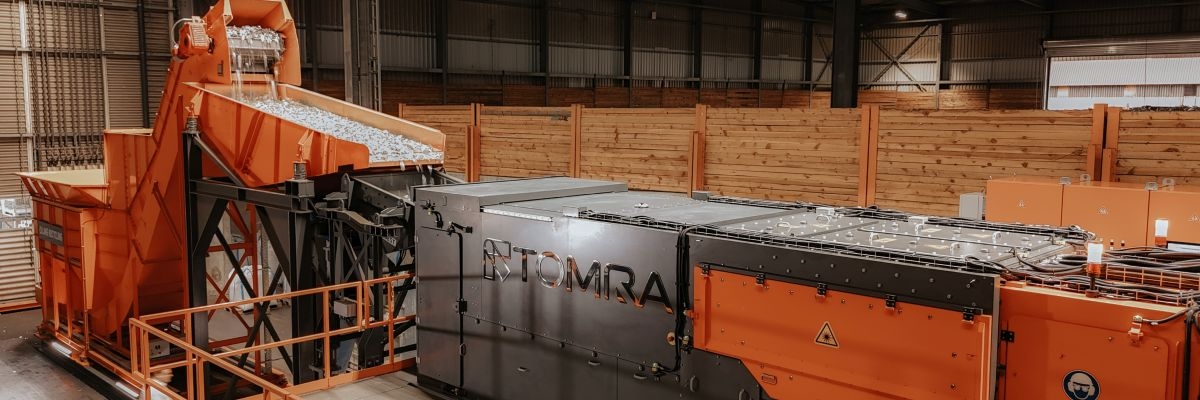
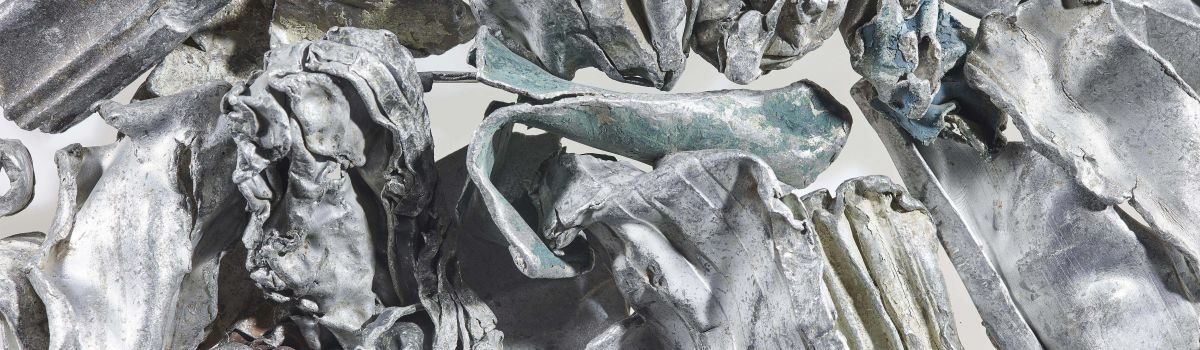
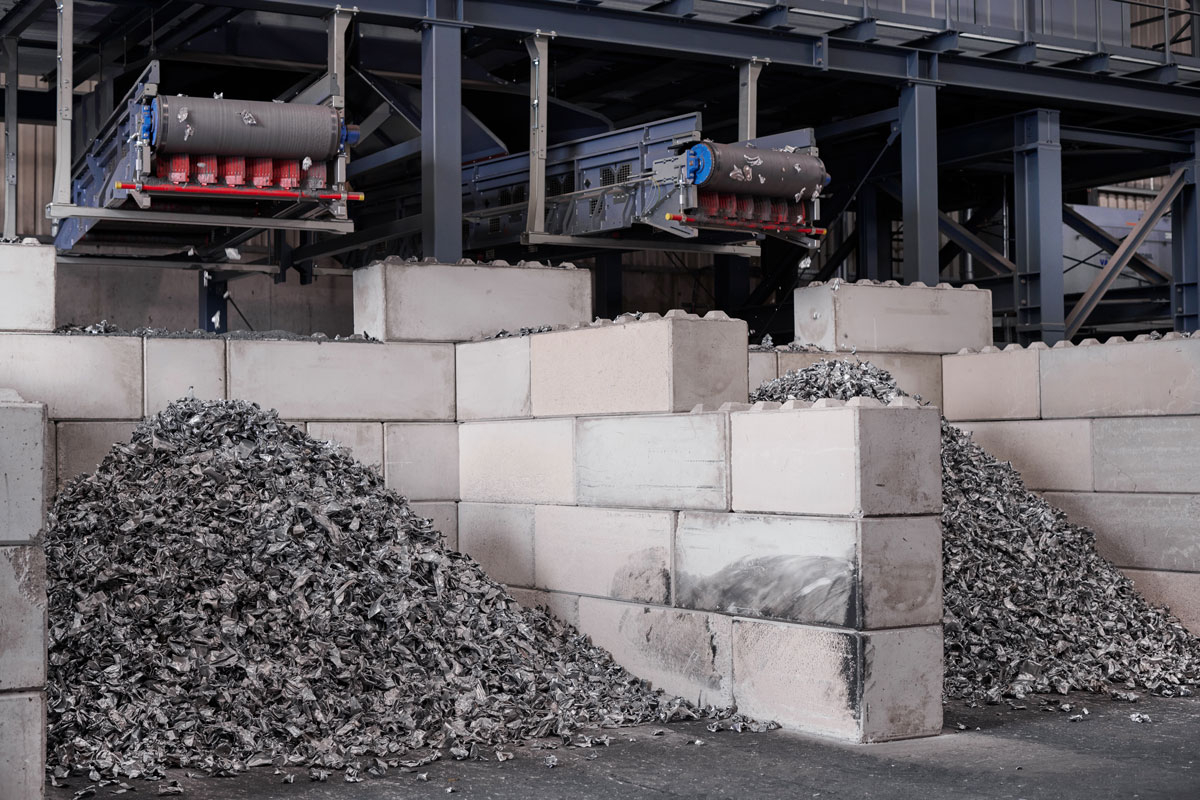
Four years after OSR became one of the first recycling companies to put Cleansort's laser-based LIBS sorting technology into industrial use, both companies are taking stock. More than 20 000 t of automotive scrap have been sorted at OSR into high-purity 5000 and 6000 series aluminium fractions. An independent life cycle assessment by EurA AG puts the associated CO2 savings compared to primary aluminium at up to 98 %. In total, 142 000 t of CO2 have been avoided.
© Cleansort
Four years after OSR became one of the first recycling companies to put Cleansort's laser-based LIBS sorting technology into industrial use, both companies are taking stock. More than 20 000 t of automotive scrap have been sorted at OSR into high-purity 5000 and 6000 series aluminium fractions. An independent life cycle assessment by EurA AG puts the associated CO2 savings compared to primary aluminium at up to 98 %. In total, 142 000 t of CO2 have been avoided.
 Oliver Scholz
© Cleansort
"We bet early on a technology that hardly anyone had tested in industrial shift operations at that time. This trust in Cleansort was a risk, but in retrospect, it was the right decision: the plant runs absolutely reliably today and has given us a clear lead as a pioneer in laser-based sorting." says Oliver Scholz, Managing Director of OSR GmbH & Co. KG.
The collaboration began in 2022 as a pioneering project: rather than a preconfigured standard solution, the aim was to bring a promising technology into industrial practice under real recycling conditions.
 © Cleansort
In a multi-year development phase funded by the German Federal Environmental Foundation (DBU), both companies combined their core competencies: Cleansort contributed optical spectroscopy and system physics, OSR the operational practice, material flow expertise and process knowledge from daily recycling operations. Today, the system runs in continuous operation, partly in three shifts.
© Cleansort
In a multi-year development phase funded by the German Federal Environmental Foundation (DBU), both companies combined their core competencies: Cleansort contributed optical spectroscopy and system physics, OSR the operational practice, material flow expertise and process knowledge from daily recycling operations. Today, the system runs in continuous operation, partly in three shifts.
 Sebastian Alvensleben
© Cleansort
"After four years of continuous industrial use, we know exactly what matters. We not only know what LIBS sorting can achieve technically, but we also know the crucial levers in everyday operation to consistently deliver the highest quality." says Sebastian Alvensleben, Managing Director of OSR Metallrecycling GmbH & Co. KG.
This is made possible by a patented two-stage process: first, pre-ablation cleans the material surface; then the actual LIBS analysis (Laser-Induced Breakdown Spectroscopy) determines the exact alloy composition within a few thousandths of a second.
 © Cleansort
According to the life cycle assessment, the carbon footprint of LIBS-sorted aluminium is 229 kg of CO2 equivalent per tonne. Compared to primary aluminium, this results in savings of 7463 kg of CO2 equivalent per tonne for 5000 series alloys (98 %) and 6763 kg of CO2 equivalent per tonne for 6000 series alloys (97 %). OSR powers its sorting operation with 100 percent renewable energy, which raises the savings rate for both alloy classes by one percentage point each.
© Cleansort
According to the life cycle assessment, the carbon footprint of LIBS-sorted aluminium is 229 kg of CO2 equivalent per tonne. Compared to primary aluminium, this results in savings of 7463 kg of CO2 equivalent per tonne for 5000 series alloys (98 %) and 6763 kg of CO2 equivalent per tonne for 6000 series alloys (97 %). OSR powers its sorting operation with 100 percent renewable energy, which raises the savings rate for both alloy classes by one percentage point each.
 Philipp Soest
© Cleansort
"Our plant delivers the best results when the surrounding infrastructure is right. OSR brings outstanding operational experience here. The team knows precisely how to prepare the material optimally and adjust the plant to get the maximum out of our technology during continuous operation." adds Philipp Soest, Managing Director of Cleansort GmbH.
Cleansort and OSR have summarised the full results of the life cycle assessment and further details of the partnership in the case study "From Innovation to Industrial Standard".
 It is available for free download.