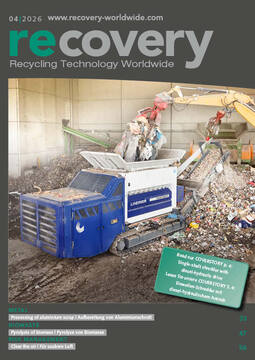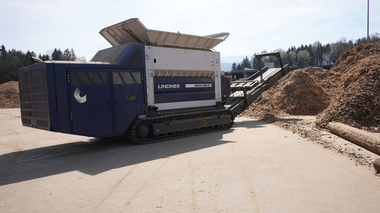


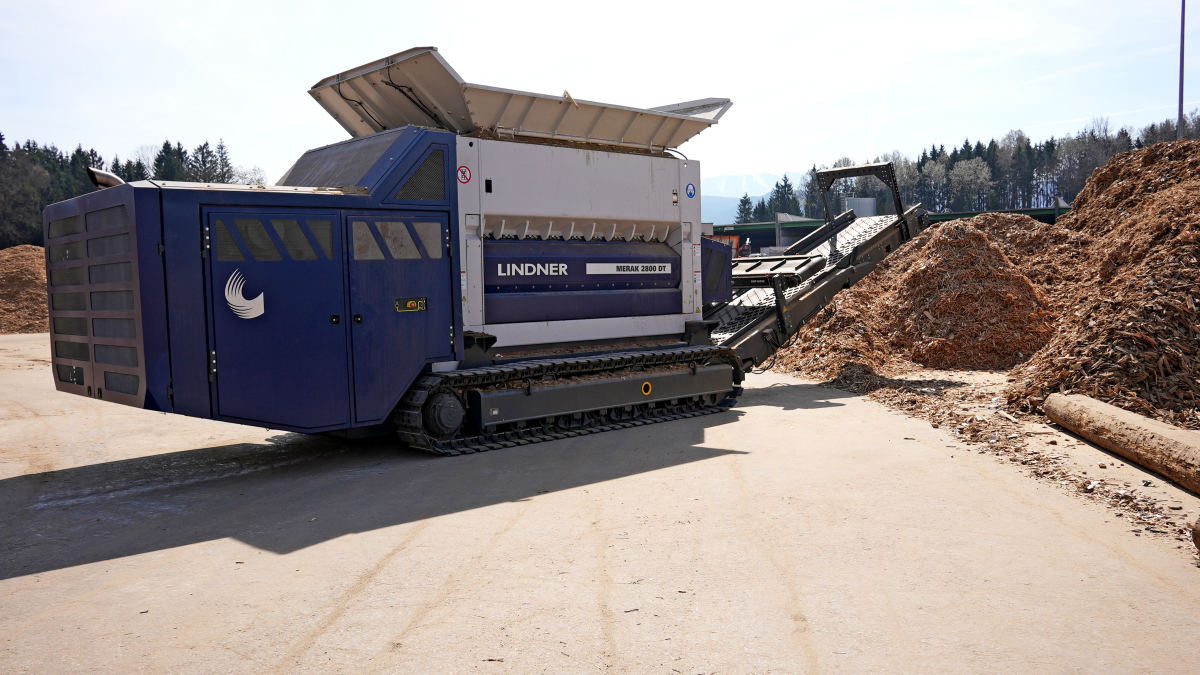
Single-shaft shredder with diesel-hydraulic drive
 © Lindner Recyclingtech
 © Dr. Petra Strunk
 © Dr. Petra Strunk
 © Dr. Petra Strunk
 © Dr. Petra Strunk
 © Lindner Recyclingtech
 © Dr. Petra Strunk
 © Dr. Petra Strunk
 © Dr. Petra Strunk
 © Lindner Recyclingtech

The recycling industry is undergoing a transformation. Material streams are becoming more diverse, operators need to work more cost-effectively, and processing plants must be able to adapt flexibly to changing requirements. For Lindner, it was this development that served as the starting point for a new generation of mobile shredding technology. MERAK became the first mobile shredder using the tried-and-tested technology of the company's stationary machines. The range has since been expanded to include a diesel-powered variant.
The MERAK 2800 was first unveiled at IFAT 2024 – at that time with a purely electric drive concept. Thanks to its high throughput and ability to handle a wide variety of materials, the mobile shredder has since found many areas of application. At IFAT 2026, the MERAK was also unveiled with a diesel-hydraulic drive system – which was given the product designation MERAK 2800 DT (Diesel Track).
This is an unusual step for a company to take, given that the trend is generally towards an electrically powered generation of machines. What advantages does this new machine variant offer the user? The MERAK 2800 DT
is capable of shredding to a defined particle size in a single pass,
can be operated independently of the mains supply and is ready for immediate use,
offers optimised investment costs,
boasts a unique selling point in its drive concept, with a rotational speed of up to 110 rpm,
offers high flexibility and versatility in its range of applications, and
the exclusive use of premium components also ensures a long service life and maximum reliability.
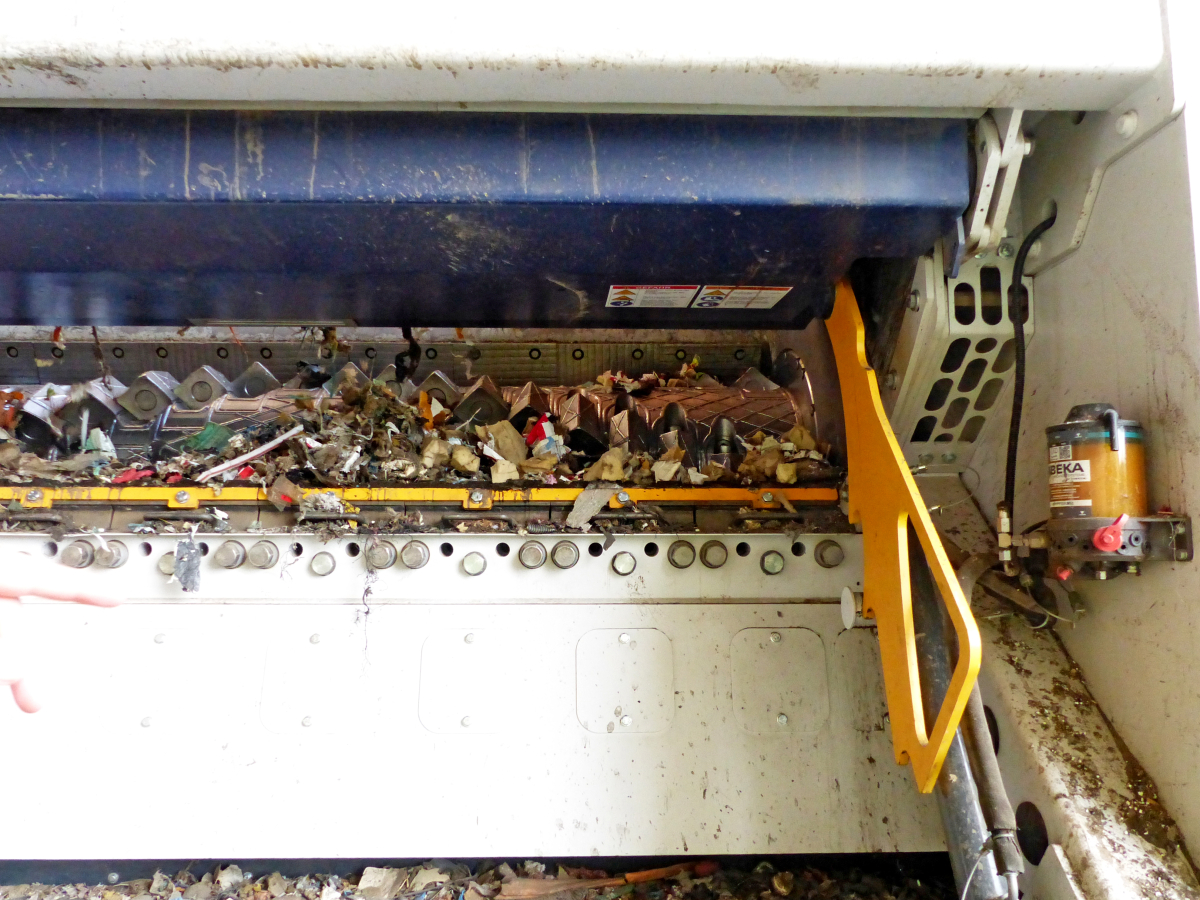
What makes the MERAK shredder so versatile? It is its universal cutting system (116PR). This enables a wide range of output particle sizes (One Step) to be achieved and allows a variety of materials to be processed, including waste wood, plastics, industrial and commercial waste, as well as household waste. In this cutting system, both the knife and the knife holders are bolted in place, meaning that individual components can be quickly replaced if necessary.
For customers with a specific application, the rotor for pre-shredding or post-shredding can also be used. The "pre-shredding" cutting system is designed to reduce the volume of large material flows. This optimally prepares materials for subsequent processing. It thus optimally prepares materials for subsequent processing. The "post-shredding" cutting system is designed for small particle sizes ranging from 30 to 120 mm.
Mobility as the answer to new requirements
In this interview, Matthias Egarter, CEO of Lindner Recyclingtech, Gerd Tischner, Segment Director Waste, and Martina Greschonig, Head of Marketing, explain why mobility is becoming increasingly important today, what role customer feedback plays in the development of new machines, and why innovation represents an investment in the future for Lindner.
recovery: Mr Egarter, the MERAK is currently the focus of many discussions surrounding mobile shredding. Before we delve into the machine itself: what developments are you currently observing in the recycling industry?
Matthias Egarter: Our industry is becoming increasingly professional. The demands placed on recycling companies are constantly rising – both in terms of cost-effectiveness and flexibility. At the same time, material flows are changing. Operators today have to process a wide variety of materials and utilise their plants as efficiently as possible. This also means that machines must be significantly more versatile than they were a few years ago.
We are therefore seeing a clear trend away from specialised solutions for individual applications towards flexible concepts that can process different material streams cost-effectively. It is precisely this development that is giving rise to many of our product ideas today.
recovery: What role do your customers’ requirements play in this?
Gerd Tischner: A central role. Our development work does not begin on the drawing board, but in discussions with the users. We ask very specific questions about the challenges they face in day-to-day operations. This often provides the decisive impetus for new machines or further developments.
Operators who process multiple material streams, in particular, have repeatedly told us that they would like to be able to use the same robust shredding technology flexibly across their site. It was precisely this that ultimately led to the basic idea behind the MERAK.
From the Polaris to the MERAK
recovery: How exactly did the MERAK come about?
Matthias Egarter: The starting point was our stationary Polaris series. These machines have proven themselves over many years thanks to their robustness, reliability and high throughput. At the same time, our customers expressed a desire to be able to utilise these characteristics in a mobile setting as well.
Our task was therefore to transfer the advantages of a stationary Lindner machine onto a mobile tracked chassis – without compromising on performance, availability or shredding quality. The MERAK was born from this idea.
recovery: How does the MERAK differ from tradition-al mobile shredders?
Matthias Egarter: Right from the start, our aim was to offer more than just mobility. The MERAK combines single-stage shredding with a defined final particle size. Many mobile machines require additional units for this or operate without an integrated screening unit. Our goal was to develop a concept that meets these requirements within a single machine.
Added to this is its high level of flexibility. The MERAK is available with different rotor designs and can therefore be adapted to various shredding requirements and material streams – from wood and commercial waste right through to to special applications It was precisely this versatility that was a key development objective.
recovery: Flexibility seems to be a key concept.
Matthias Egarter: Absolutely. Our customers today often process several material streams in parallel. Nobody wants to purchase a separate machine for every application. That is why we have designed the MERAK to be as versatile as possible.
The machine can be optimally configured depending on the material. At the same time, we have further developed the existing cutting systems and enhanced their performance. The pointed knife system, in particular, has been improved in terms of throughput and range of application.
recovery: How did the market react to the launch of the electric MERAK 2024?
Gerd Tischner: The response was extremely positive – both nationally and internationally. Our customers particularly appreciated the combination of versatility, robustness, high throughput and a consistent particle size. These are characteristics that set the MERAK apart from many other mobile concepts.
recovery: Following the successful launch of the electric MERAK, the next step in development – the diesel MERAK – soon followed. What was the deciding factor behind this?
Gerd Tischner: In fact, the impetus for this came directly from the market as well. The electric MERAK was very well received. Many customers appreciated the combination of the robustness of a stationary machine and the flexibility of a mobile solution. At the same time, we kept receiving the same feedback: “The machine is impressive – but there is often no high-capacity power supply available at the site of operation.”
The sites where mobile shredders are used often include remote recycling centres as well as demolition projects or temporary construction sites. In such locations, an independent power supply is often crucial. The diesel MERAK was developed in response to this requirement. It is not a departure from the electric concept, but rather a logical extension of it.
recovery: What role does the electric MERAK play within the product range today?
Matthias Egarter: Both machines have their rightful place. Where a high-performance power supply is available or can be established in the future, the electric version offers clear advantages in terms of energy efficiency and operating costs. The diesel MERAK, on the other hand, is aimed at users who need to work independently of the mains supply on a permanent basis.
Martina Greschonig: That is why we do not view the two concepts as competitors. They complement each other and open up different fields of application. The decisive factor is always the specific location and purpose of use.
recovery: What was the development process for the diesel-powered version?
Gerd Tischner: An electric motor and a diesel engine behave completely differently. An electric motor delivers its torque immediately and very smoothly. A diesel engine, by contrast, has a different power characteristic and places entirely different demands on the drivetrain.
Our task was therefore not simply to fit a different engine. Rather, we had to design the entire drivetrain in such a way that, despite the different characteristics, the machine achieves the same shredding quality and the same process stability as the electric version. It was precisely this interaction between the engine, gearbox and control system that was the real development challenge.
recovery: Did you have to make any compromises on performance?
Gerd Tischner: No. That was not part of our plan at all. Our internal performance tests show that both machines achieve comparable results in terms of throughput, final particle size and range of materials. Users should be able to expect the same level of performance regardless of the drive system.
recovery: How did the market launch of the diesel MERAK go?
Matthias Egarter: The premiere at IFAT 2026 was an important milestone for us. The feedback from our customers was very positive. The MERAK can now also be operated at remote recycling centres, as well as in countries that do not have a sufficiently developed electricity grid. Acquisition costs are reduced, particularly for these users.
Flexibility as a key to commercial success
recovery: I’d like to return to the concept of versatility. Why is this issue so crucial for your customers today?
Matthias Egarter: Because the operating conditions in the recycling sector are constantly changing. Material flows shift, new materials are introduced and existing markets continue to evolve. Operators must be able to respond to these changes without having to replace all the equipment in their plant.
A machine that reliably processes a wide variety of materials reduces investment risks and opens up new business opportunities. This is precisely what our concept aims to achieve: maximum flexibility, versatility and performance, combined with high cost-effectiveness.
When shredding becomes a key technology
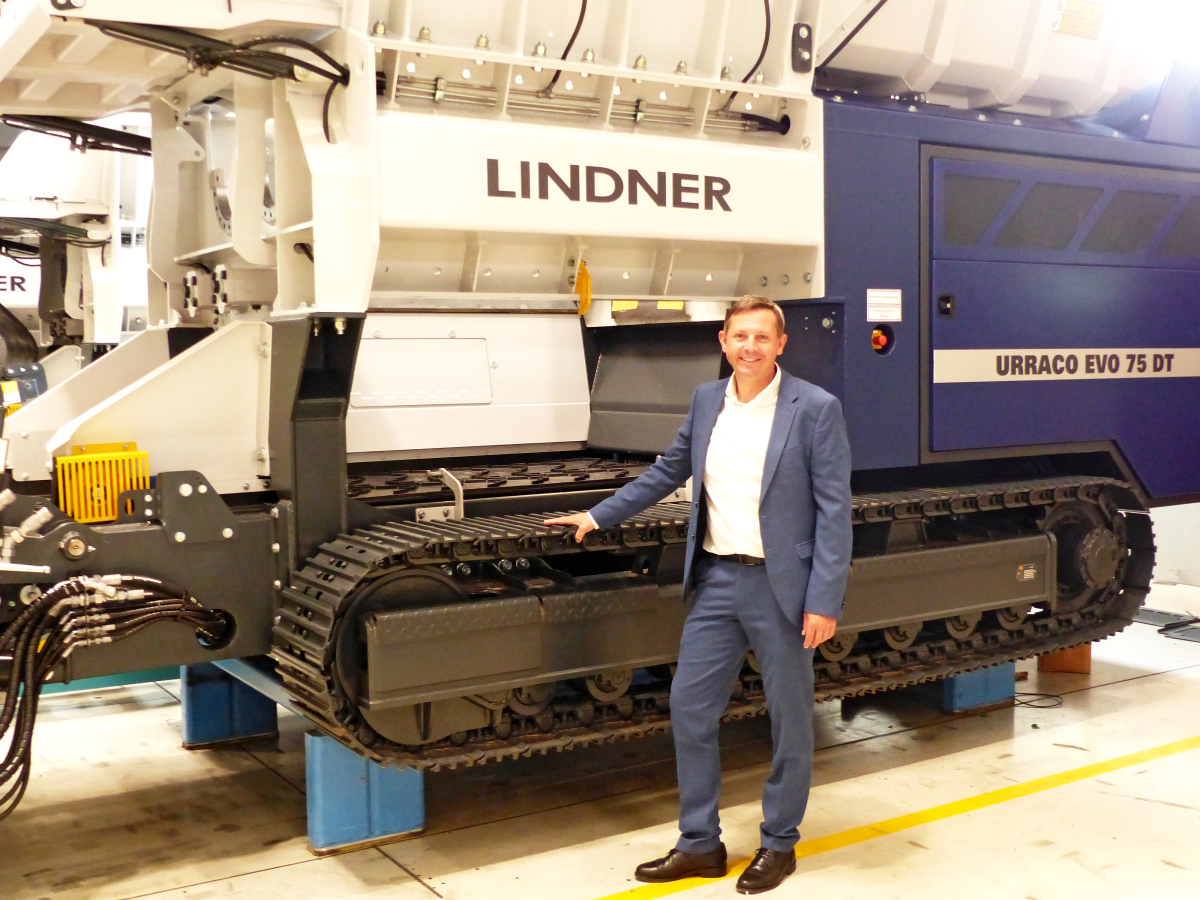
recovery: In addition to the MERAK, you have introduced the URRACO EVO, a machine designed for particularly demanding applications. What was the objective behind this development?
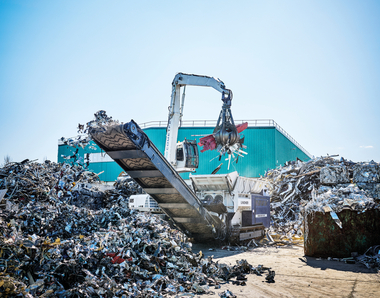
Gerd Tischner: Thanks to its hydrostatic drive system and various shaft configurations, the URRACO EVO processes a wide range of input materials, including waste wood, MSW, and C&I waste. Its robust and reliable design makes it particularly suitable for demanding heavy-duty applications. Our initial focus was on metal recycling – in particular scrap metal, which places high demands on power, wear resistance and machine stability.
Martina Greschonig: However, during development it became apparent that the machine is also suitable for other demanding materials. This led to new areas of application, such as the recycling of rotor blades from wind turbines.
recovery: Why is the URRACO EVO particularly well-suited to such materials?
Gerd Tischner: Rotor blades and scrap metal are among the most demanding material streams being shredded today. They place high demands on the entire drive train, the rotor design and the stability of the machine.
The URRACO EVO was developed precisely for this purpose. The twin-shaft design ensures controlled material feed and enables the processing of highly abrasive materials. For us, this is really the pinnacle of shredding technology.
recovery: The recycling of rotor blades is currently coming increasingly into focus. What role can shredding play in this?
Gerd Tischner: First and foremost, it creates the very conditions necessary for any further recovery. In many places, end-of-life rotor blades used to be sent to landfill because there were no suitable recovery processes. Controlled shredding now opens up various recovery pathways for the first time.
Martina Greschonig: Shredding should be viewed as the first step in the process rather than the end point. Only once the material has been reduced to a manageable form can a decision be made as to which recycling route makes sense – be it energy recovery, use as a filler, or, in the long term, high-quality material recycling. This is where we see the real progress.
recovery: This topic is often the subject of heated public debate – particularly with regard to energy recovery.
Matthias Egarter: We are also following this discussion. From our perspective, it is important to look at the bigger picture. Not every material can currently be recycled into high-quality materials. Nevertheless, it is a step forward if rotor blades no longer have to be sent to landfill.
Energy recovery replaces fossil fuels and takes place in modern plants with comprehensive emissions control. At the same time, research institutions and industry are working hard to achieve significantly higher material recycling rates in the future. Shredding is a prerequisite for this – it's not a replacement but makes these processes possible in the first place.
recovery: What prospects do you see for the coming years?
Matthias Egarter: We are still at the very beginning of this development. Rotor blades consist of various composite materials which, so far, can only be separated to a limited extent. This is currently the focus of intensive research.
We are supporting this development together with our customers. Our aim is to process the materials in such a way that they can be further processed to the highest possible standard in future. We have also seen similar developments in plastics recycling. What seems self-evident today was just a pipe dream a few years ago. That is why we are convinced that significant progress will also be made in the recycling of composite materials in the coming years.
recovery: What practical experience have you gained so far?
Gerd Tischner: We have already deployed the URRACO series extensively in metal applications, as well as for shredding rotor blades. We also have reference customers who are using the machine in this area of application. This confirms our development approach and shows that heavy-duty technology can also be applied to new material streams.
“Innovation starts with the customer – not in the development office”
recovery: Lindner has introduced a wide range of new products and technologies in recent years. Where does this innovative drive come from?
Matthias Egarter: There are plenty of ideas – from the market, from within our company and from direct dialogue with users. The real challenge lies in setting priorities and implementing the right developments at the right time.
For us, innovation always starts with the customer. We listen carefully to how requirements are changing in practice and which problems actually need to be solved. This leads to new machines, new processes or further developments of existing technologies.
recovery: That sounds like a very consistent focus on the customer?
Matthias Egarter: That is indeed an essential part of our corporate culture. Many successful developments in recent years have emerged from joint projects with customers.
Martina Greschonig: The diesel MERAK is a good example of this. Nobody had originally planned to develop a second drive variant. The idea arose from specific feedback from users who wanted to use our electric machine but did not have a suitable power supply at their site. We pick up on such ideas at an early stage and develop marketable solutions from them.
recovery: At the same time, you invest continuously in research and development – even in economically challenging times. Does that pay off?
Matthias Egarter: Yes. It is precisely at such times that we consider innovation to be particularly important. We have never scaled back our development activities, but have deliberately continued them. Of course, there are more ideas than can be implemented at any one time. That is why we have to decide carefully which projects offer the greatest benefit to our customers.
Our aim is not to introduce as many new products as possible, but to develop solutions that create long-term economic value.
recovery: What criteria take priority here?
Matthias Egarter: Ultimately, what matters is the customer’s cost-effectiveness. For the operator, it is not just the purchase price of a machine that counts, but the cost per tonne of material processed. That is why we always look at the entire system: investment, energy consumption, wear and tear, maintenance costs, availability and service.
A technically sophisticated machine must ultimately pay for itself in day-to-day operation. That is how we measure our developments.
Digitalisation is also transforming mechanical engineering
recovery: Alongside mechanical engineering, digitalisation is becoming increasingly important. What developments are you observing?
Gerd Tischner: Our customers now expect significantly greater transparency than they did a few years ago. Larger corporate groups, in particular, want to analyse machine and operational data centrally and compare processes across different sites. That is why digitalisation is gaining importance at all levels – both for our customers and within our own company.
recovery: What role does artificial intelligence play in this?
Matthias Egarter: Mechanical engineering is still in its infancy in this regard, but development is progressing rapidly. Our aim is to make machines more intelligent. In future, they should be able to recognise material properties as autonomously as possible, automatically adapt processes and actively support the operator.
At the same time, we are working on functions such as predictive maintenance. The machine should recognise at an early stage when a wear part will need replacing or when a fault is imminent.This helps to avoid unplanned downtime and increase plant availability.
recovery: Is this also a response to the shortage of skilled workers?
Matthias Egarter: Absolutely. Qualified machine operators are becoming increasingly difficult to find. That is why machines must become easier and more intuitive to operate.
We are developing systems that support the operator step by step – for example, through clear guidance during troubleshooting or automatically generated recommendations for action. The aim is to make day-to-day work easier whilst simultaneously increasing operational safety.
From machine manufacturer to technology partner
recovery: Alongside its machine manufacturing activities, Lindner is also continuously expanding its systems business. What is behind this development?
Matthias Egarter: Today, our customers are increasingly looking for complete solutions from a single source. They do not want to have to deal with interfaces between different suppliers, but prefer to have a single point of contact for the entire project.
For this reason, we have established our own company, Lindner Systems Engineering. It supports projects from the initial process analysis through to process engineering design and right through to the turnkey plant. In this way, we are expanding our offering without replacing our traditional machinery business – the two areas reinforce one another.
recovery: Does this also change how you see yourselves?
Matthias Egarter: Yes. Of course, our machinery remains at the heart of what we do. At the same time, we now see ourselves more strongly as a technology partner for the entire process chain.
Our aim is not merely to supply individual components, but to work with the customer to develop a solution that is economically viable in the long term. This begins with process planning but does not end at the point commissioning, instead we continue supporting our customers with service and further developing their plants.
Thinking globally, shaping the future
recovery: The recycling industry is developing very dynamically worldwide. What changes are you observing in the international markets?
Matthias Egarter: Recycling has been a global issue for a long time. Whilst in Europe the circular economy and regulatory requirements are key drivers, in other regions the focus is often on resource security, the development of modern waste management structures or the use of residual materials for energy.
For us, this means that requirements can vary greatly depending on the market. At the same time, we recognise a common trend worldwide: operators are increasingly investing in high-performance, cost-effective and flexible technologies. This is precisely what we are focusing our developments on.
recovery: Is this also changing the recycling industry itself?
Matthias Egarter: Yes, significantly. The industry is becoming increasingly professional. Many companies are growing, investing in modern plants and increasingly thinking in terms of complete process chains. At the same time, new material streams are emerging that played hardly any role at all a few years ago.
This development opens up great opportunities, but also demands new technical solutions. We need comprehensive concepts that can be adapted to changing conditions.
recovery: Which material streams will have a particularly significant impact on developments in the coming years?
Gerd Tischner: Rotor blades from wind turbines are certainly a key issue as well as photovoltaic modules, composite materials and textiles. These materials differ significantly from traditional recyclable materials and place new demands on processing.
We are therefore working intensively on processes that can economically utilise such material streams. In doing so, we work closely with customers, research institutions and partners. Our aim is to provide solutions at an early stage, before these materials come onto the market in large quantities.
recovery: Looking ten years ahead: what will bring about the greatest change in recycling technology?
Matthias Egarter: I am convinced that several developments will converge. Digitalisation and artificial intelligence will make processes more transparent and efficient. At the same time, new material streams will further increase the demand for innovative processing technologies. And last but not least, the circular economy will grow in importance worldwide.
For us, this means remaining open to change. We will continue to invest heavily in research and development in the future and work with our customers to develop new solutions. After all, the best ideas emerge where machines are in daily use.