

Interview with Julia Stadler, Co-CEO of STADLER Anlagenbau GmbH
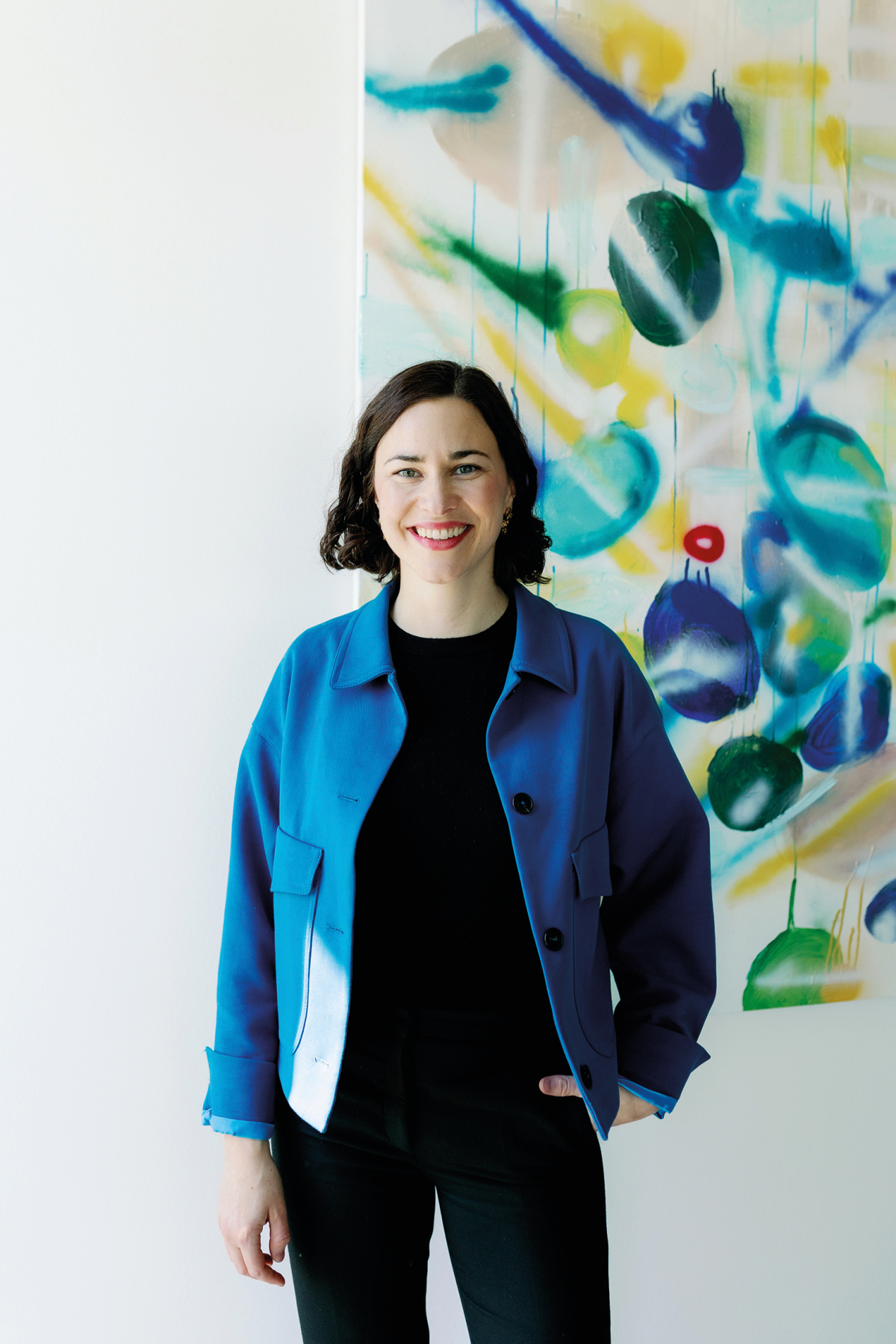


Julia Stadler is part of the eighth generation of the family-run business STADLER, which designs and builds sorting plants for the recycling industry worldwide. Together with her father, Willi Stadler, she is Co-Managing Director of this long-established company.
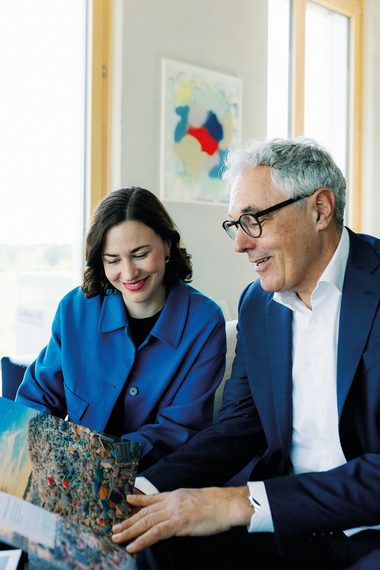
At IFAT 2026, Julia and Willi Stadler, together with their colleagues Dr Nils Kroell and Dr Xiaozheng Chen, Head of Digital Solutions at the STADLER Group, as well as Dr Bastian Küppers, Head of Process Engineering at the STADLER Group, presented the latest developments from STADLER in a live demonstration. recovery took this as an opportunity to ask a few more detailed questions. In a conversation with recovery’s editor-in-chief, Dr Petra Strunk, Julia Stadler provided interesting insights into her role as co-managing director, the development of and feedback on the new recycling solutions presented at this year’s IFAT, and current and future challenges.
recovery: Ms Stadler, at IFAT 2026 in Munich, the family-run company STADLER presented a "Demo Loop" developed specifically for IFAT – a fully integrated setup centred around a mini-sorting plant. The focus was on the cloud-based STADLERconnect platform, which, for example, automates quality control, plans maintenance intervals and optimises plant performance. What was the general response at IFAT to the STADLER stand, and specifically to the still relatively new STADLERconnect system?
Julia Stadler: The response was very positive. The Demo Loop clearly demonstrated how digital solutions can interact directly with plant technology. That was precisely what interested many visitors: not digitalisation as an abstract topic, but something tangible and visible in a functioning sorting plant.
STADLERconnect also attracted a great deal of interest. Although the system is still a relatively new product in our portfolio, it has already been very successfully received by the market. We have now sold STADLERconnect to over 40 plants in 11 countries. This shows that there is a very high international demand for greater transparency, automated quality control, predictive maintenance and optimised plant performance.
recovery: Almost exactly a year ago, we reported in recovery on your appointment as co-managing director with effect from 1 June 2025. How have your areas of responsibility changed since then, given that, until then, you were heavily involved in the company’s digital transformation as Chief Digital Officer?
Julia Stadler: My role has become significantly broader. As Chief Digital Officer, my focus was very much on digitalisation, IT and the further development of digital solutions. Today, my responsibilities also include, amongst other things, our global service business, HR, process management, process engineering, as well as marketing and communications.
This has also given me greater scope for shaping the business. It is no longer just about driving forward individual digital projects but about integrating different areas of the company more closely and further developing STADLER as a whole – organisationally, technologically and culturally.
recovery: STADLER began in 1791 as a village smithy; it first came into contact with the recycling industry on the occasion of the 1972 Olympic Games, and today it is a globally active company with around 600 employees. The business sector has also changed completely and adapted to the needs of each era. What is the "secret" behind such a successful development? Where do the ideas for new products and new business areas come from?
Julia Stadler: My grandfather had a very clear motto: stay close to the customer, stay close to the product and stay close to the staff. That sounds simple, but I believe that is precisely where a significant part of our success lies.
New ideas rarely emerge at a desk. They arise through direct interaction with customers, on production lines, in projects and in discussions with our teams. If you truly understand the specific challenges faced by customers, you can develop solutions that create real added value. This proximity to the market and to technology has always been one of STADLER’s strengths.
recovery: At recycling events, the challenges in the field of textile recycling are a recurring topic. STADLER is also active in this field with its sorting machines. How do you assess future developments in textile recycling, and what solutions does STADLER offer?
Julia Stadler: In my view, textile recycling is a sector with great potential, but also with considerable challenges. The material flows are complex, the qualities vary greatly, and the sorting requirements are high.
STADLER has already gained practical experience in this field. We have commissioned two textile sorting plants, one in Sweden and one in Italy. Our strength lies in combining mechanical sorting technology, plant design and, increasingly, digital solutions in such a way that recoverable fractions are produced from complex material streams. I am convinced that textile recycling will become significantly more important in the coming years.
recovery: STADLER announced at IFAT that the company will be stepping up its presence in the Asian market – specifically in Japan and India. Are there plans to expand activities further across the whole of Asia?
Julia Stadler: In the medium term, we see great potential in Asia. It is crucial for us not just to tap into markets in the short term, but to build long-term structures – with reliable partners, good service and a clear understanding of local requirements.
recovery: At the bvse (Federal Association for Secondary Raw Materials and Waste Management), you gave a presentation on the topic "How are digitalisation and artificial intelligence changing the sorting of recyclable materials – and what potential does this hold for the circular economy?" How do you see the future use of AI; what are the advantages, and could there also be any negative effects?
Julia Stadler: I see many opportunities. Sorting, in particular, generates enormous amounts of material and machine data. If this data is used effectively, plants can be operated more intelligently, efficiently and reliably. AI can help to improve quality, increase throughput, reduce downtime and make maintenance more predictable.
Of course, issues such as cyber security, data quality and data sovereignty must be taken seriously. But in my view, the opportunities clearly outweigh the risks. The key is not to see AI as an end in itself, but as a tool that solves specific problems in plant operations.
recovery: What is particularly important to you in your role as co-managing director? And which areas would you like to develop further or hand over in the future?
Julia Stadler: For me, our customers and our staff come first. Our aim must be to deliver systems and services that function reliably in day-to-day operations and create real added value for our customers. At the same time, we need a working environment in which our staff take on responsibility, develop their skills and are keen to contribute to the company.
Furthermore, it is important to me that STADLER remains innovative and continues to professionalise. We are a family-run business with a long history, but we must constantly re-evaluate ourselves: in terms of processes, digital solutions, service, organisation and leadership. Tradition and a willingness to embrace change are not mutually exclusive – on the contrary, it is precisely this combination that makes STADLER strong.