

TriPlast relies on AI-powered X-ray sorting from WeSort.AI
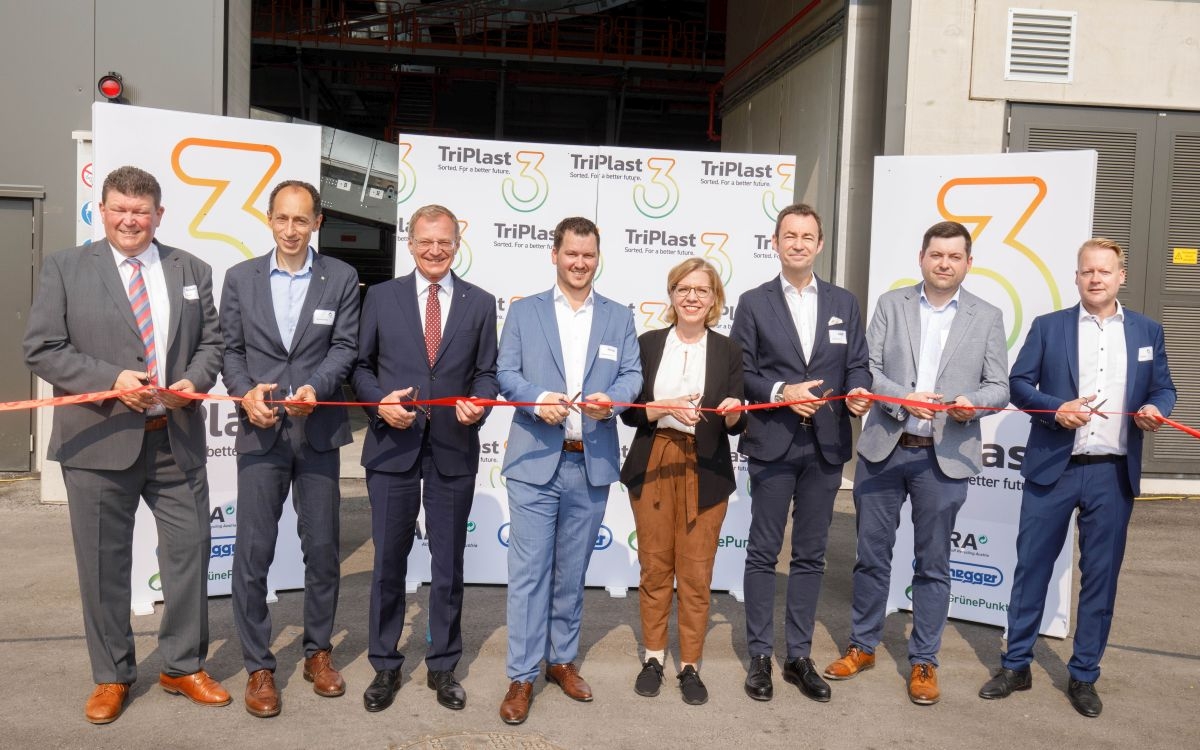
22.06.2026A handshake at the world’s leading trade fair, IFAT in Munich, marks the launch of a technological safety initiative in high-end recycling. TriPlast GmbH – a joint venture between ARA (Altstoff Recycling Austria AG), Bernegger GmbH and Der Grüne Punkt GmbH – is equipping its state-of-the-art light packaging sorting plant (LVP) in Enns, Upper Austria, with AI-supported X-ray technology.
From September 2026, WeSort.AI’s X.Sort system will be in continuous operation there, safeguarding material flows weighing several tonnes. The plant, which was constructed by the main contractor Sutco, is thus setting new standards in plant safety.
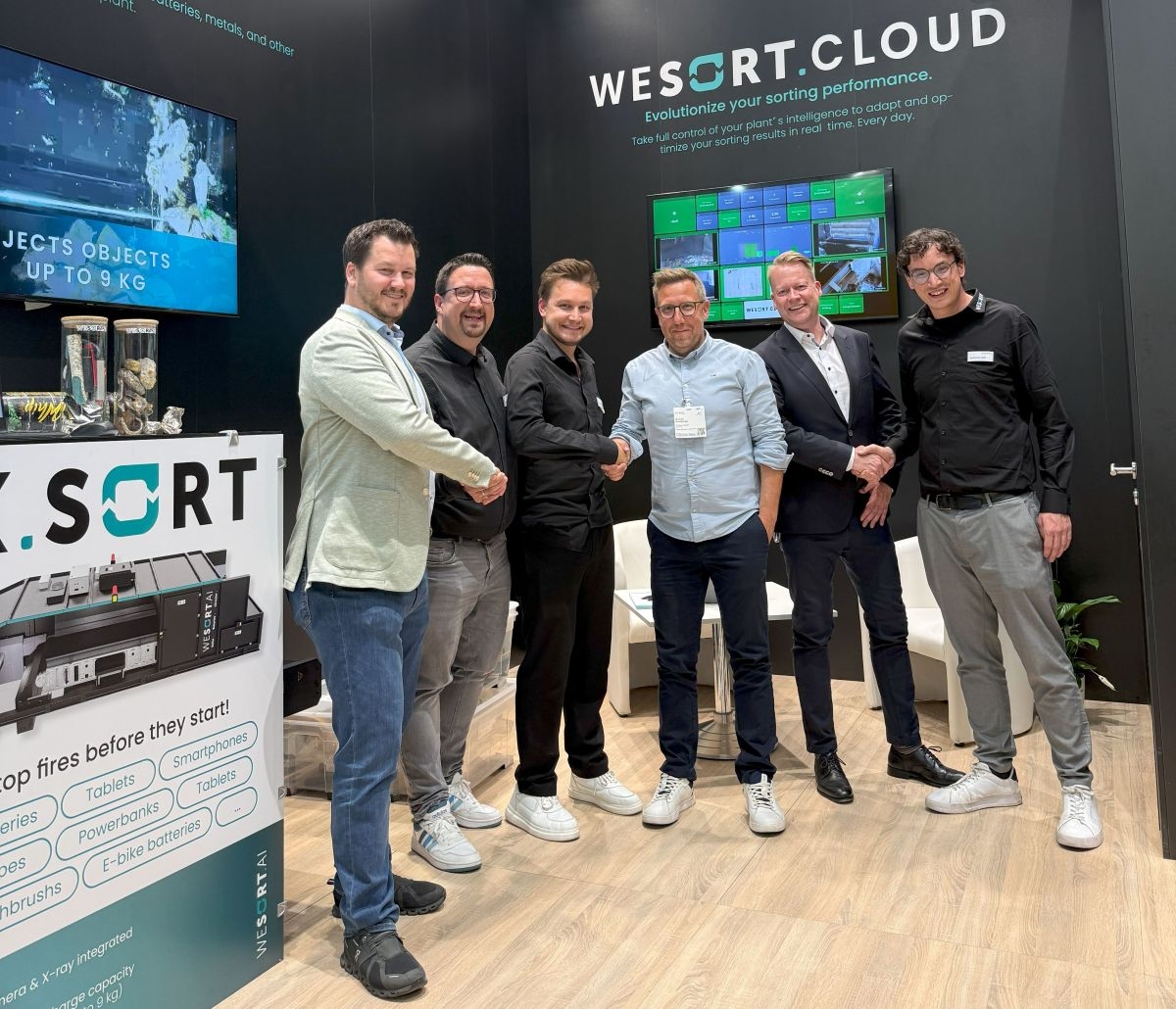 From left to right: Kurt Bernegger (CEO of Bernegger and Managing Director of TriPlast), Daniel Hayn (Head of Sales & Marketing at WeSort.AI), Nathanael Laier (CEO & Co-founder of WeSort.AI), Michael Buchberger (Operations Manager at TriPlast), Jürgen Secklehner (Managing Director of ARAplus and TriPlast), Denis Völler (Managing Director at Der Grüne Punkt and Managing Director of TriPlast) and Johannes Laier (CEO & Co-founder of WeSort.AI) at the WeSort.AI booth at IFAT 2026
© WeSort.AI GmbH
Minimising the risk of fire at TriPlast
This move is a response to what is currently the recycling industry’s worst-case scenario: fires caused by lithium-ion batteries that have been disposed of incorrectly.
To better protect its investment of € 65 million in total, and above all its on-site staff, TriPlast is further expanding its comprehensive safety measures and implementing an additional step at the start of the sorting process.
The technological highlight: pre-screening
The technical feature of the new installation lies in its early placement. The X.Sort is positioned directly behind the input module.
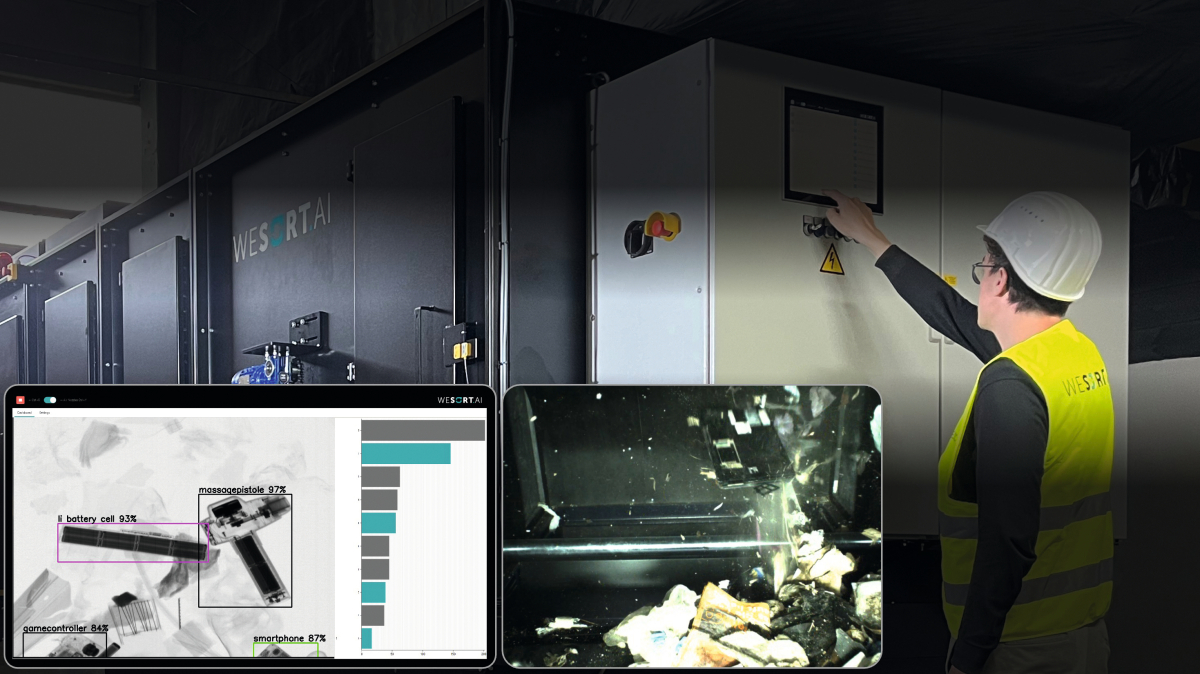
“We intercept the risk before it becomes a hazard further down the line,” explains Daniel Hayn, Head of Marketing & Sales at WeSort.AI. “Immediately after the containers are opened, our system scans the material flow using X-ray transmission (XRT) and AI. Individual batteries or e-waste hidden in the rubbish are immediately ejected using compressed air, even before they reach the actual sorting plant.”
Experience shows that, on average, around 12.5 kg of hazardous contaminants are safely removed from the process per hour. For Enns, WeSort.AI is also integrating a new AI model that detects high-density contaminants to prevent mechanical damage to the machinery.
 From left to right: Kurt Bernegger (CEO of Bernegger and Managing Director of TriPlast), Daniel Hayn (Head of Sales & Marketing at WeSort.AI), Nathanael Laier (CEO & Co-founder of WeSort.AI), Michael Buchberger (Operations Manager at TriPlast), Jürgen Secklehner (Managing Director of ARAplus and TriPlast), Denis Völler (Managing Director at Der Grüne Punkt and Managing Director of TriPlast) and Johannes Laier (CEO & Co-founder of WeSort.AI) at the WeSort.AI booth at IFAT 2026
© WeSort.AI GmbH
Responsibility and security of supply
In Enns, around 100 000 t of lightweight packaging from Germany and Austria are sorted into 24 high-purity fractions every year. Any plant shutdown has an immediate and significant impact on downstream recyclers.
Jürgen Secklehner, Managing Director of TriPlast, emphasises: “As operators of one of the most modern facilities in Europe, we bear an enormous responsibility towards our employees and for ensuring the supply of secondary raw materials to the economy. WeSort.AI’s technology has thoroughly impressed us in live operation. The X.Sort helps to effectively address rising battery risks and maintain sorting quality at a high level.”
Installation and the final integration of the system into ongoing operations are scheduled for September 2026.