

DIEFFENBACHER Fiber2Fiber plant begins operation
First-of-its-kind system now recycling fiberboard for Unilin in Bazeilles/France 12.05.2026In the fall of 2025, Unilin’s new DIEFFENBACHER Fiber2Fiber plant successfully produced its first fibers from recycled fiberboard material. The industrial-scale fiberboard recycling plant is now operational and has been fully integrated into the ongoing production process at Unilin’s MDF plant in Bazeilles/France. The plant is the first in the world capable of recycling both internal fiberboard waste, such as production waste and residual materials from fiberboard manufacturing, and post-consumer fiberboard material, for example from bulky waste.
 DIEFFENBACHER Fiber2Fiber plant at Unilin’s MDF production site in Bazeilles/France
© DIEFFENBACHER
“We are excited to announce the successful integration of our new Fiber2Fiber plant from DIEFFENBACHER into our existing MDF line. The system is unique worldwide, as was the collaboration between our two companies on this project. This innovation allows us to integrate recycled fibers into decorative products such as our Master Oak collection, without compromising on quality,” says Jan Gallet, General Manager MDF at Unilin.
“Now everyone can see the capabilities of our unique Fiber2Fiber process,” says Michael Rupp, Head of the Recycling Business Unit at DIEFFENBACHER. “Through the development of Fiber2Fiber, we have achieved what was once considered impossible: making fiberboards recyclable on an industrial scale. This innovation not only supports the circular economy but also sets new standards for sustainable production in the industry,” he adds.
 Highly efficient fiber cleaning with DIEFFENBACHER’s
© DIEFFENBACHER
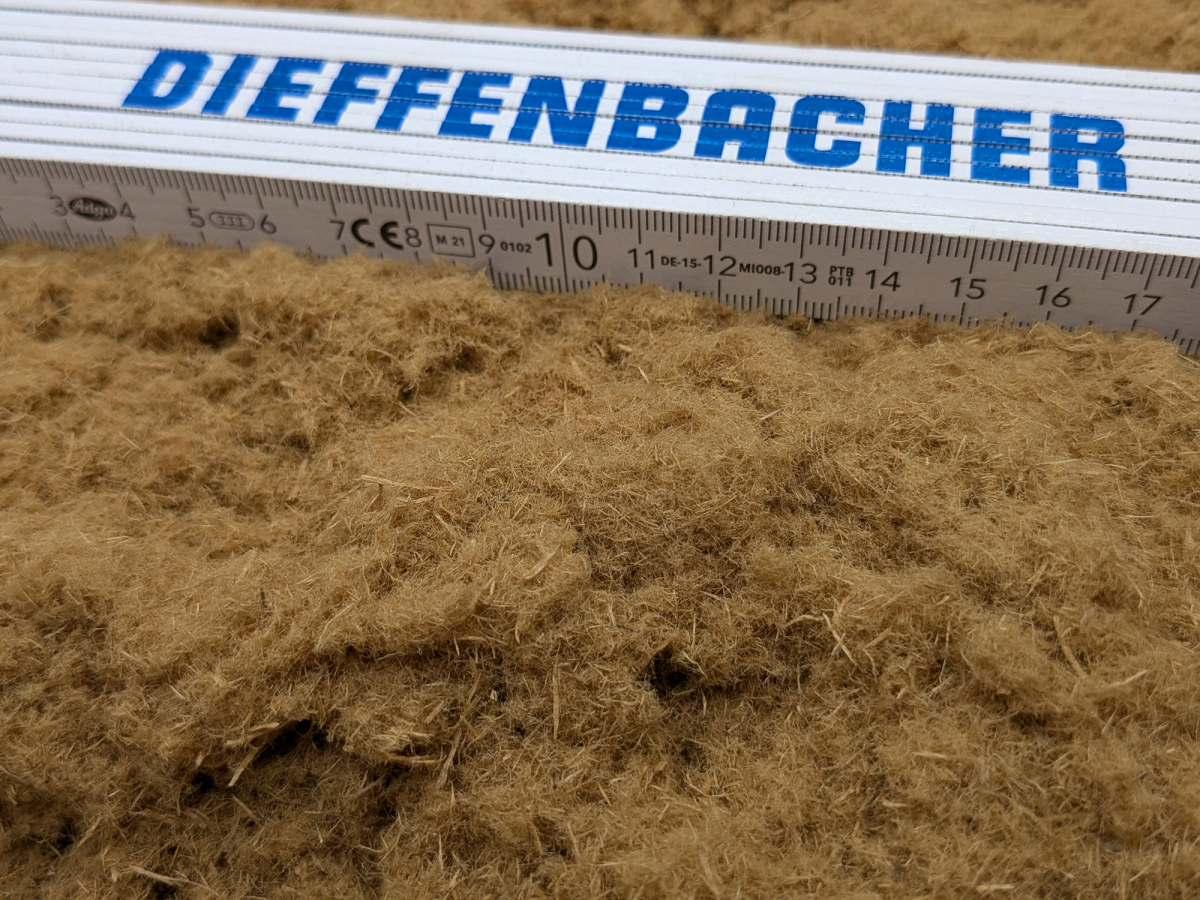
Fiber2Fiber uses a steam process to recover fibers from waste fiberboards. In DIEFFENBACHER’s FiberXtractor, the fiberboard waste is processed in a closed autoclave system using only steam at high pressure. When pressure is rapidly released, the steam causes the fiberboard structure to burst apart, separating the fibers without damaging their original structure. These fibers are immediately reintegrated into the production of new fiberboards, proving the process’s economic and technical viability.
 Fibers from waste fiberboard material recycled by Unilin’s new DIEFFENBACHER
© DIEFFENBACHER
One of the most significant advantages of the Fiber2Fiber process is its ability to handle both internal production waste and post-consumer material – a unique development by DIEFFENBACHER. Post-consumer waste, in particular, presents challenges due to contaminants such as sand, silicate and coatings that must be removed before reintroducing the fibers into the production process. DIEFFENBACHER’s unique sifter technology addresses this challenge by ensuring that only clean fiber fractions are processed. The entire process is designed to be integrated into existing production lines, offering flexibility and scalability to meet the needs of different manufacturers and their final products.
 New wood fiberboard made from recycled fibers, produced using DIEFFENBACHER’s Fiber2Fiber fiberboard recycling process
© DIEFFENBACHER
“Our Fiber2Fiber process stands out for several reasons,” explains Jean-Christophe Zimmermann, Head of Sales of DIEFFENBACHER’s Recycling Business Unit. “First, it recycles high-quality fibers that are indistinguishable from those derived from virgin wood. Second, it effectively removes contaminants and coatings, making the recycled fibers suitable for a wide range of applications. Third, the process is robust and tolerant of impurities, ensuring consistent output even with variable input materials. These advantages and others make Fiber2Fiber the first choice of any fiberboard manufacturer considering fiberboard recycling,” he concludes.