

Steinert and Eggersmann cooperate on data analysis
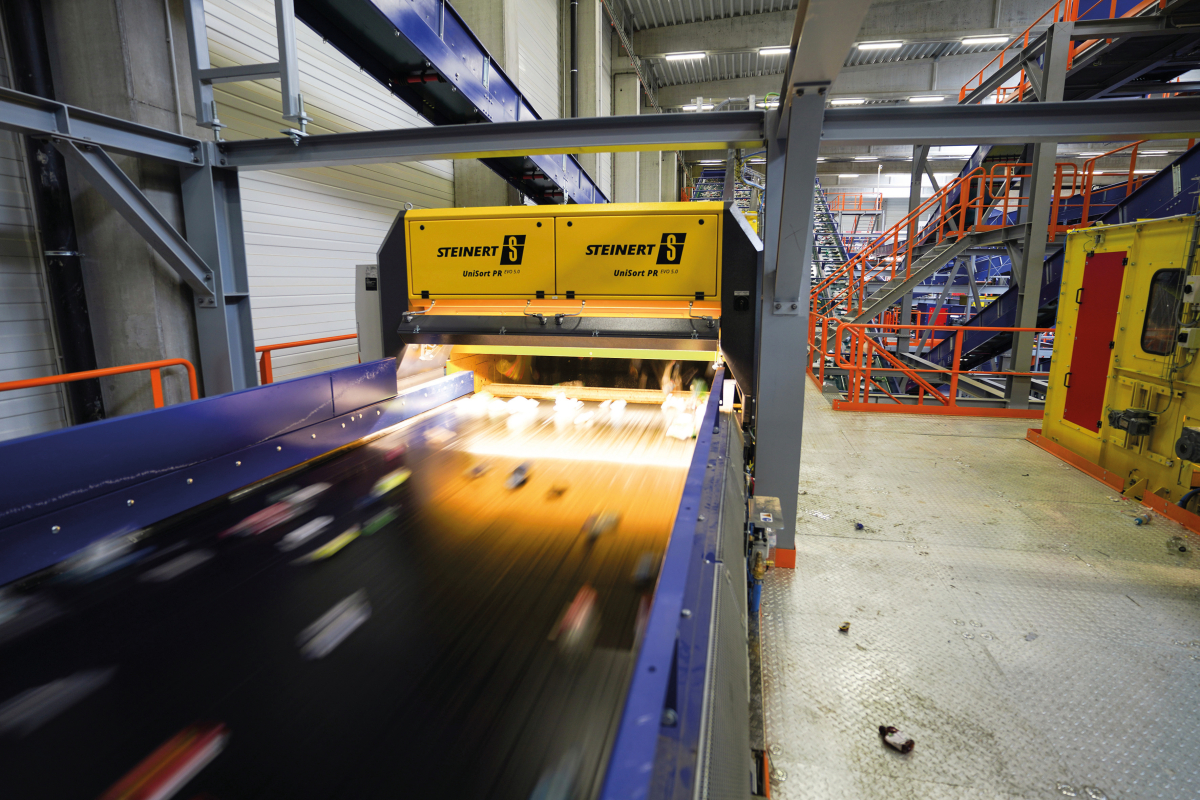
STEINERT UniSort GmbH and Eggersmann Anlagenbau GmbH have brought their technologies closer together to increase the performance of recycling systems. At the heart of the cooperation is the performance monitoring integrated into the Eggersmann ESA app, which analyses sensor data from STEINERT UniSort NIR sorting systems in real time and derives practical recommendations for action.
AI evaluation of live data against silent losses
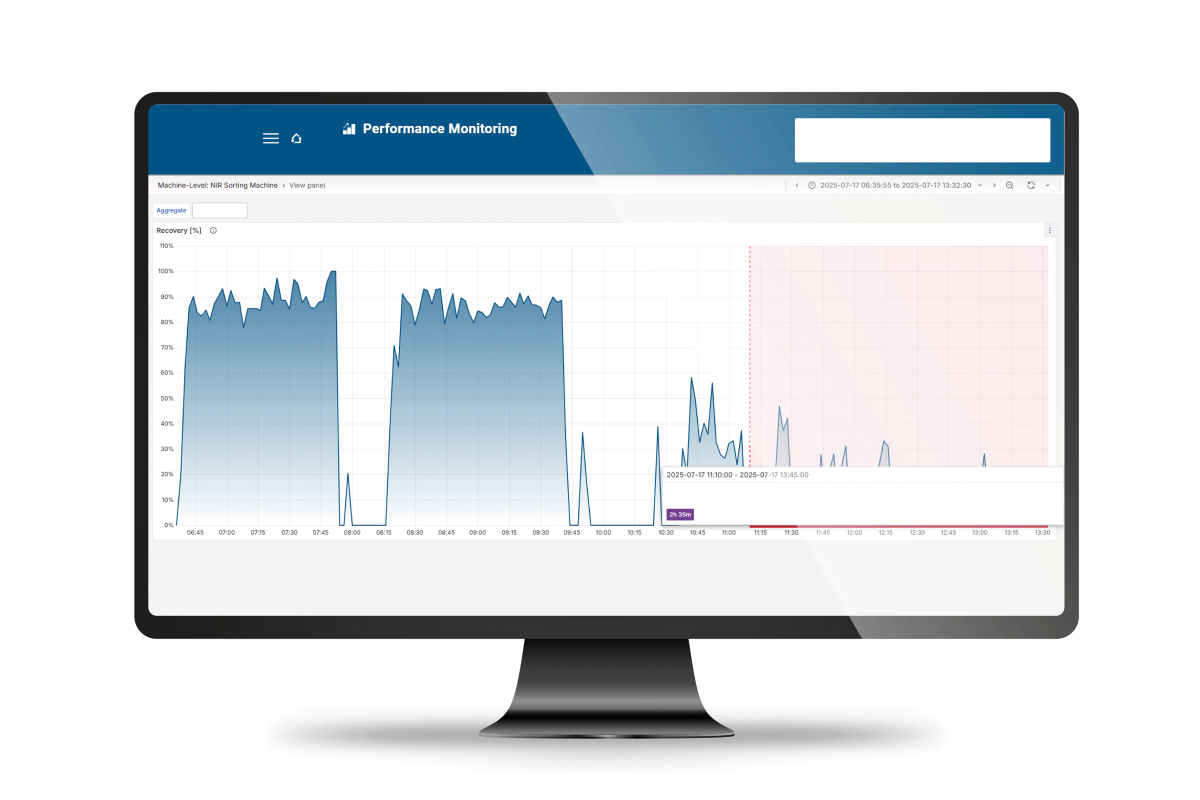
„The principle of near-infrared sorting enables extremely precise separation accuracy, especially when it comes to the difficult differentiation of plastic types while still maintaining high throughput rates,“ explains Andreas Jäger, Managing Director at STEINERT UniSort. „But only as long as the sensors can work properly.“ However, owing to the input material contamination is a constant threat in recycling plants: a 70 % drop in performance due to build-up on the sensors, nozzle strips or light sources is an all too familiar scenario for NIR sorting systems across all manufacturers. While these contaminations can occur very quickly, they take longer to detect if they are monitored manually. They are often only recognised after the next shift change. During this time, the system continues to run and produces fewer products or batches of inferior purity.
The performance monitoring in combination with the integrated anomaly detection of the ESA app of Eggersmann enables – among other things – a reduction of precisely such silent losses. „Our performance monitoring analyses all the data transmitted by the machine‘s sensors directly in real time and presents it visually. The material flows are recalculated from several NIR data sources and conveyor belt speeds in order to continuously determine KPIs [key performance indicators, editor‘s note] such as the sorting performance of individual units,“ explains Dr Sebastian Felder, Head of Digital Solutions at Eggersmann. „Thanks to the AI-based anomaly detection system, performance deviations are also automatically recognised and reported at an early stage. The ESA app can thus demonstrably reduce the incorrect output of NIR sorters by up to eight hours per machine per month.“ The higher output of the fractions produced goes hand in hand with a direct increase in value.
In addition, both material blockages and material part blockages are identified at an early stage with the help of the anomaly detection. Not only is the particle distribution on the conveyor belts monitored, but the throughput data from different NIR sensors is also continuously synchronised. This can also make under-utilisation of the line visible.
Technical cooperation for more efficient recycling
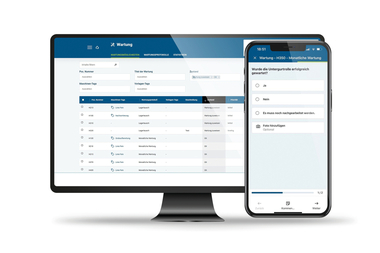
Performance monitoring and anomaly detection are just two of several modules in the ESA app. There are also a maintenance management, a logbook and a document storage. „Our ESA app is designed as a comprehensive all-in-one solution for digital plant management and process optimisation, whereby plant operators can put together the modules individually depending on their actual needs,“ explains Dr Felder. „Especially for the live transmission of data and its evaluation in real time, we need correspondingly capable sensors and connections. The stable and open interfaces of STEINERT UniSort already offered us the best conditions. However, the mutual exchange was truly remarkable. The effort of STEINERT UniSort made a significant contribution to optimising the use of the sensor data. An ordinary coordination process became a real technical cooperation for more efficient recycling.“ Jäger is also highly satisfied with the joint dialogue: „We want plant operators to achieve operational excellence with our sorting systems. Eggersmann shares this goal and the cooperation was therefore very constructive right from the start. By connecting our sensors directly to the ESA app, our customers can react even faster to deviations and safeguard their system performance.“ Both companies intend to continue their cooperation in the future.