

Hosokawa Alpine presents solution for textile recycling
Hosokawa Alpine has developed a new solution for the sustainable recycling of textile waste. The Augsburg-based machine and plant manufacturer is thus setting standards in textile shredding and making it possible to reuse textile waste efficiently and in a resource-saving manner.
Sustainability in action
Since 1 January 2025, the EU Directive on the collection of used textiles has stipulated that used textiles must be collected separately in order to promote their recycling and reuse. The aim of this regulation is to strengthen the circular economy. Recycling companies therefore need efficient solutions and processes to not only shred textile waste, but to prepare it for recycling. Hosokawa Alpine has developed such a process. The textile bales are first shredded and then pneumatically conveyed to the Hosokawa Alpine Rotoplex to be defibred. In the next step, a classifier separates the fibres into two fractions: clean fibres for recycling and contaminated textile waste that can be disposed of.
A classic with a new application
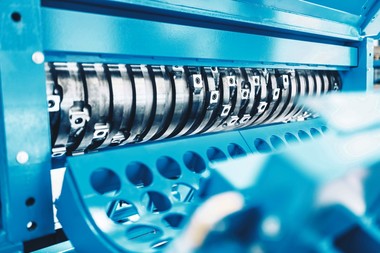
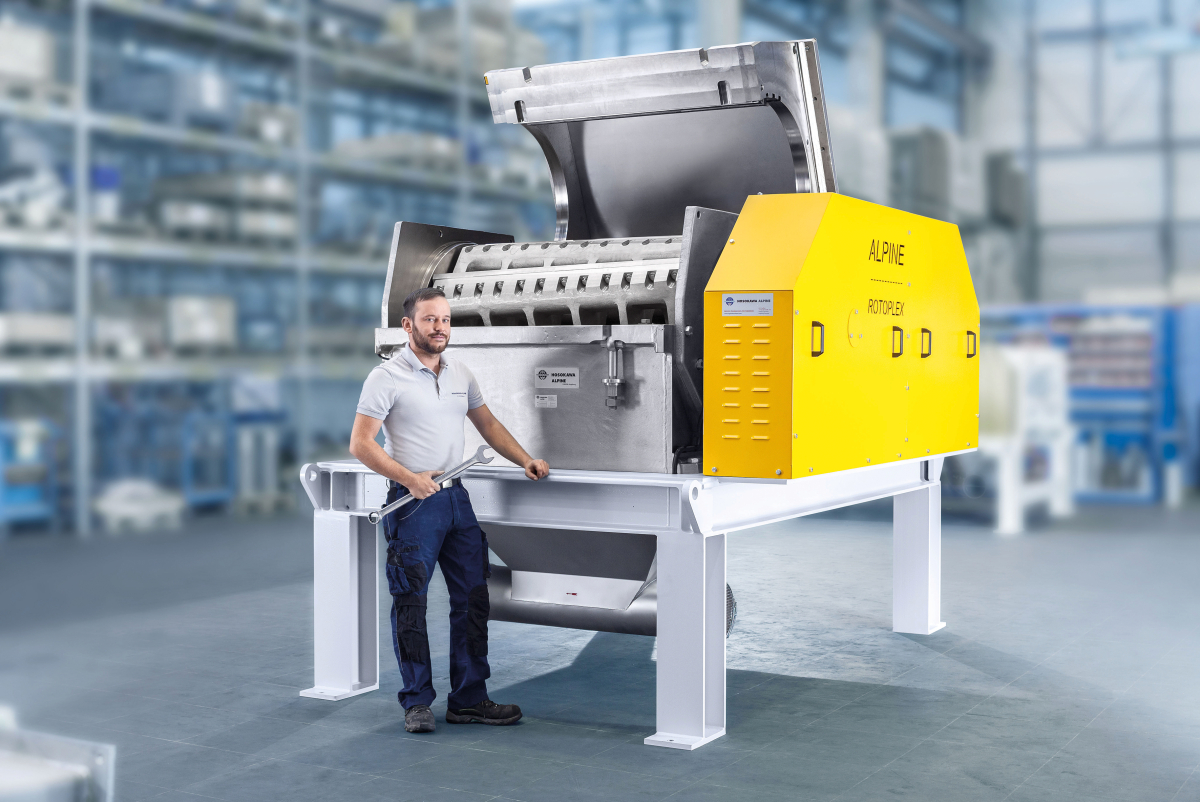
At the heart of Hosokawa Alpine‘s process is the Rotoplex granulator – a classic in the portfolio of the Augsburg-based mechanical engineering company and a machine, which is celebrating its 60th anniversary this year. "We are continuously developing the Rotoplex to adapt it to new applications. This is how we combine its robust design with the latest technology," says Michael Meyerle, Sales Manager Recycling Technologies at Hosokawa Alpine. The solid, durable cast housing guarantees a long service life and is optionally available with water cooling. Optimum throughput is achieved thanks to pneumatic suction, while the specially developed rotor design increases output by up to 50 % compared to the standard version. "The Rotoplex is capable of shredding up to 400 kg of textiles per hour," says Meyerle. "This conserves valuable resources and sustainably closes production cycles." ATEX certification with radio identification for maximum safety is also available on request.