

New € 8.9 million EU project launches to recover critical raw materials from Europe's e-waste
11.09.2026CIRCUIT4EU, a new Horizon Europe project, has officially launched to recover Critical Raw Materials (CRMs) and Strategic Raw Materials (SRMs) locked inside printed circuit boards, permanent magnets, and electronic components discarded across Europe every year. Started in June 2026, the project brings together 21 partners across 9 countries for 42 months, to advance new recycling technologies and help secure a more circular raw materials supply for the EU.
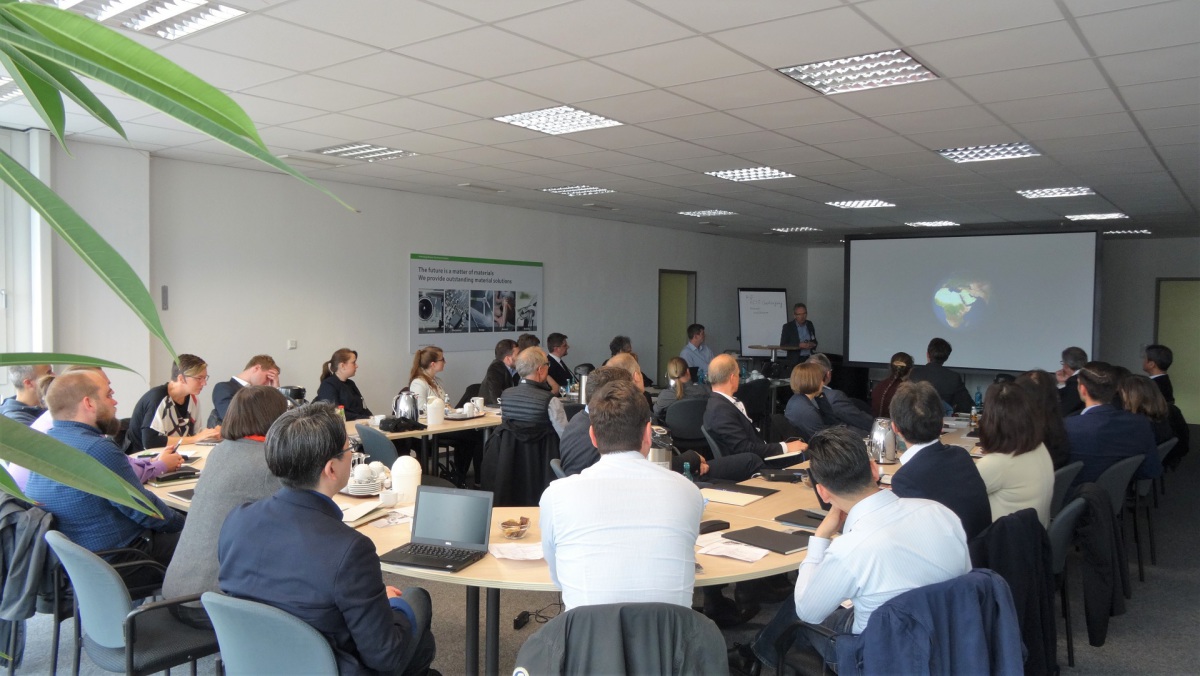
 CIRCUIT4EU kickoff meeting in Paris in June 2026
© Laure Playoust
The European Union depends heavily on imported Critical Raw Materials and Strategic Raw Materials to supply its electronics, renewable energy, electro-mobility and digital industries. The EU Critical Raw Materials Act sets an ambitious benchmark: by 2030, 25 % of the EU's annual CRM consumption should come from recycling. Yet vast quantities of these materials remain untapped, discarded every year inside Waste Electrical and Electronic Equipment (WEEE) that could otherwise be recovered, reused, and recirculated.
CIRCUIT4EU will target 9 of the EU's 34 Critical Raw Materials – including copper, cobalt, nickel, antimony, tantalum, boron, and rare earth elements – recovering them from printed circuit boards, permanent magnets, and electronic components. Solutions will be piloted across four everyday product groups: laptops, Wi-Fi boxes, e-scooters, and dishwashers. Over the course of the project, the consortium will advance 10 technologies (including robotic disassembly, desoldering, hydrometallurgical recycling, Digital Product Passports, and AI-driven quality inspection) up to Technology Readiness Level 7. Beyond technology, CIRCUIT4EU aims to shift the market itself: from one driven by virgin material supply, to one where refurbishers and recyclers have real-time visibility of CRM and SRM flows and can order high-value components on demand, closing the loop across Europe.
 Solutions will be piloted across four everyday product groups: laptops, Wi-Fi boxes, e-scooters, and dishwashers
© Laure Playoust
"Critical raw materials are sitting inside millions of laptops, routers, e-scooters and appliances that Europe already owns. CIRCUIT4EU exists to prove that recovering them at scale is not just technically possible, but it is the foundation of a genuinely circular electronics industry," said Nicolas Perry, Coordinator, ENSAM (Arts et Métiers).
CIRCUIT4EU is coordinated by ENSAM (Arts et Métiers), France, and brings together a multidisciplinary consortium of 21 partners across 9 countries: France, the United Kingdom, Switzerland, Belgium, Italy, Spain, Slovenia, Nigeria, and Colombia. The consortium spans industry and technology leaders, research and academic institutions, producer responsibility organisations, standardisation bodies, and specialised SMEs and innovators, with the WEEE Forum leading the project's communication, dissemination, and stakeholder engagement activities.
Running from June 2026 to November 2029, CIRCUIT4EU has a total budget of approximately € 8.9 million, with an EU contribution of over € 7.7 million, funded under the Horizon Europe Research and Innovation Programme (Grant Agreement No. 101294454).