

Who, how, what – between regulation and reality


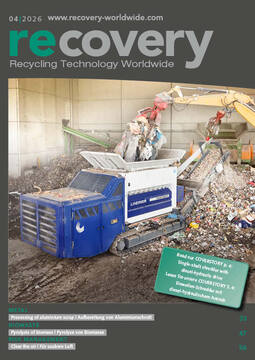
Although the PPWR (Packaging and Packaging Waste Regulation), which comes into force on 12 August 2026, sets clear targets for the use of recycled materials, in practice the "how" is often still missing. Due to rising costs and uncertain operating conditions, the circular economy is currently failing to realise its full potential. However, modern shredding and cleaning technologies, as well as well-thought-out processing concepts such as those offered by Vecoplan AG, are already demonstrating how regulatory targets can be put into practice.
The raw materials crisis and rising cost pressures are currently posing dramatic challenges for the plastics industry. Small and medium-sized enterprises, in particular, are faced with rising prices and, at the same time, a lack of planning certainty, which is increasingly hampering investment. Yet plastic will continue to retain its value in the future and remain a key material in modern value chains. European regulation – in particular the European Packaging Regulation (PPWR) – is therefore becoming increasingly important. It is intended to create a binding framework for the use of recycled materials and thus promote investment security in the long term. However, there is still considerable uncertainty regarding the exact details of its implementation. Whilst the introduction of mandatory recycled content quotas is regarded as an important step towards a functioning circular economy, current market conditions are making their short-term implementation difficult. In particular, the price advantage of virgin plastics over recycled materials represents a structural obstacle. “As long as virgin plastics are often cheaper than processed recycled materials, we have a structural problem,” says Tim Hamer, Director Sales at Vecoplan AG. “Naturally, users therefore only employ recycled materials to a limited extent; this is quite clearly a question of cost-effectiveness.”
Not just clean, but pure – the focus on material purity
The PPWR establishes, for the first time, mandatory minimum proportions for recycled materials in plastic packaging. As a result, the availability of high-quality recycled materials – that is, materials suitable not only for traditional downcycling applications but also for sophisticated packaging solutions – is becoming increasingly important. Against this backdrop, a key bottleneck is coming increasingly into focus: the purity of the material streams used. This is because the quality of recycled materials is not determined solely by sorting technologies, but is largely influenced by the composition and degree of contamination of the input material. Foreign polymers, paper content, mineral residues and organic contaminants significantly increase the processing effort and lead to rising reject rates. Even minor contamination can significantly impair the mechanical properties of recycled materials and make their further processing more difficult. As contamination increases, costs consequently rise throughout the entire process chain: from sorting and cleaning right through to the processing of residual materials. At the same time, the achievable material quality decreases, meaning that recycled materials can often only be used in less demanding applications. Downcycling is therefore often not a conscious market decision, but the direct consequence of insufficient purity. “Plastic purity determines the economic viability of recycling processes. The challenge lies not so much in the ‘whether’ but in the ‘how’ – that is, in achieving the required purity efficiently and consistently under real-world conditions,” says Tim Hamer.
Greater efficiency through well-thought-out processing concepts
It is precisely at this interface between required purity and economic outlay that modern processing concepts come into play. The key here is the optimal interplay of all process steps, from shredding through sorting to cleaning. Only when these are coordinated can consistent qualities be achieved that also meet high standards, such as those in the packaging or food sectors. By combining shredding expertise with integrated cleaning technology, Vecoplan AG offers precisely such a comprehensive approach, which is clearly distinct from isolated, one-off solutions. This approach focuses primarily on three aspects: process stability, application-specific processing and economic efficiency. Tim Hamer explains: “A key factor in reducing operating costs lies in the shredding process itself. Energy consumption and throughput are decisive factors in determining the cost per tonne. Through optimised cutting geometries and shredding systems designed for specific applications, efficiency gains of up to 30 % can be achieved.”
Dry cleaning as an essential component
Vecoplan AG, which recently announced the integration of its subsidiary Pla.to – a specialist in cleaning technology – is focusing on the dry cleaning process alongside its shredding solutions. This process requires no water whatsoever. Whether as a standalone process step or in combination with wet chemical processes, it is gaining in importance as a flexible component within the entire processing chain. This is because, depending on the application, dry cleaning fulfils different functions. For some recycling applications, it delivers a perfectly adequate material quality, meaning that energy-intensive wet cleaning can be dispensed with. Furthermore, in more complex processes, it is used as a pre-cleaning stage to significantly reduce water consumption in downstream washing processes. It also plays an important role in chemical recycling, as it reduces residual moisture and thus enables the production of extrudable flakes. “For us, the key lies in a consistently application-oriented approach. Not every application requires maximum purity, but it does require a specific, achievable level of quality,” concludes Tim Hamer.
Against the backdrop of the PPWR, companies such as Vecoplan AG are demonstrating that the technological implementation has long been possible. It will be crucial to reconcile regulatory targets with economically viable solutions. Whilst the basic obligations of the PPWR will come into force on 12 August 2026, specific legislation setting out individual detailed requirements – such as the phased recycling targets from 2030 onwards – is not expected until 2040. Flexible technologies such as dry cleaning can already help to reduce investment uncertainties and gradually further develop existing processing concepts.