

Artificial intelligence supports sustainable transformation
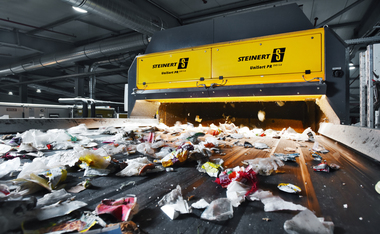
What role does artificial intelligence play in achieving the UN Sustainable Development Goals? Four independent research projects show that AI can promote greater sustainability. From health and well-being to education, humane working conditions, and production process optimization - in the recently published third volume, “Profit”, of the trilogy “Regenerative Futures and Artificial Intelligence”, researchers show how they are laying the foundation for greater sustainability through interdisciplinary collaborations with companies. The three regions of Lusatia, the Central German mining region, and the Rhenish mining region have all been severely affected by structural change, largely due to the phase-out of coal. Based in these regions, the Regional Competence Centers for Labor Research (ReKodA) are collaborating with more than 50 companies to explore the impact of new technologies and AI on the world of work, and to develop innovative work systems. Researchers from the PAL project in Lusatia, the KMI project in Leipzig, the AkzentE4.0 and WIRKsam projects in the Rhineland, and the WIN:A transfer project have now joined forces to examine their work through the lens of sustainability. To assess the extent to which digital transformation and AI promote sustainability in the context of work, they referred to the United Nations‘ Sustainable Development Goals (SDGs). Their findings showed that the use of AI in companies has a positive impact on a total of six of the 17 sustainability goals, provided that the use of technology is embedded in a humane work design.
Jennifer Link, research associate at the WIRKsam Competence Center, explains: “Although the global community as a whole is still a long way from achieving these goals, the ReKodA projects, as beacons in their regions, show that the human-centered use of AI can make a decisive contribution to sustainability. In this context, it is particularly important to involve employees in the development process.”
Her colleague, Dr. Adjan Hansen-Ampah, elaborates: “Such an approach can increase sustainability not only in the most commonly considered ecological and economic dimensions - efficiency being the keyword. We can also strengthen social sustainability by improving working conditions, e.g. through fostering ergonomic relief and a learning-friendly environment.” AI-enabled automated solutions can thus ensure healthier working conditions. AI-based recommendation systems provide easy access to knowledge in process control. In addition, the use of intelligent assistance systems can physically and mentally relieve employees in quality management.